


CBD, CBG, Hemp Benefits, Pet Health
Beyond Humans: How Animals Experience Cannabinoids
What science reveals about the shared biology of calm
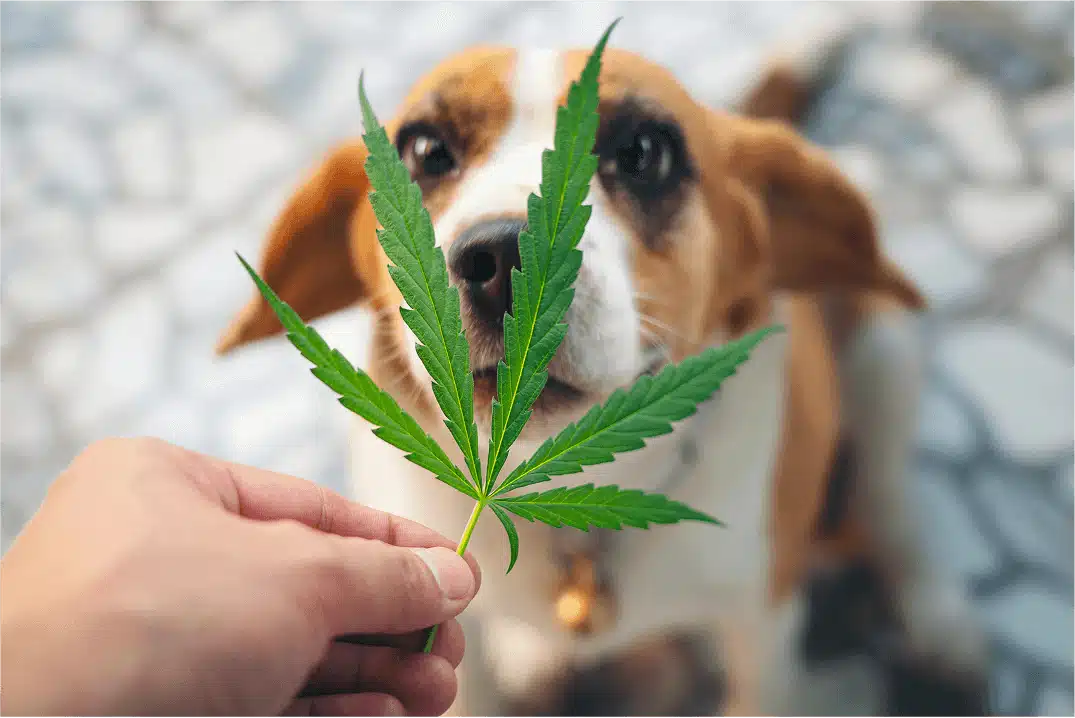
When you give your dog a CBD treat or your cat a few drops of tincture, something quietly ancient happens. Deep in their cells — as in yours — a network of receptors awakens, balancing mood, easing pain, steadying the rhythm of life itself. It’s called the endocannabinoid system (ECS), and it’s not just a human phenomenon. From dolphins to dogs, goldfish to horses, nearly every vertebrate on Earth carries this same biological code.
That means when we talk about cannabinoids, we’re really talking about a shared chemical language — one that evolution has been refining for over half a billion years.
- The Endocannabinoid System: Nature’s Common Thread
- Dogs, Cats & Horses: Familiar Faces in the Cannabinoid World
- Beyond the Barnyard: Fish, Birds, and Dolphins
- Terpenes Beyond CBD: Nature’s Aromatic Engineers
- Why It Matters — and What It Reveals About Us
- The Future of Animal Cannabinoid Research
- Conclusion
The Endocannabinoid System: Nature’s Common Thread
The ECS is one of the most widespread and essential systems in biology. Think of it as an internal balancing act — quietly influencing everything from appetite and immunity to mood and sleep.
Its main components — endocannabinoids (like anandamide and 2-AG), receptors (CB1 and CB2), and enzymes — help the body maintain homeostasis, or internal balance.
What’s remarkable is how far this system stretches across the animal kingdom. Nearly all vertebrates, and even some invertebrates, have their own version of it. This means that the chemistry behind “relaxation,” “reward,” or “pain relief” in a human isn’t unique — it’s an ancient adaptation shared by countless other species.
In other words, the reason your dog chills out after a CBD biscuit isn’t just coincidence — it’s biology echoing across evolution.
Dogs, Cats & Horses: Familiar Faces in the Cannabinoid World
Veterinarians and pet owners are increasingly exploring cannabinoids like CBD and CBG for animals — not as a fad, but as a scientific extension of this shared endocannabinoid system.
- Dogs, for instance, have a particularly high density of CB1 receptors in their brains. That means they can be especially sensitive to cannabinoids — which is why formulations must be carefully balanced. CBD has shown promise in reducing anxiety, inflammation, and seizure activity in dogs without the psychoactive “high” of THC.
- Cats, on the other hand, have a more limited distribution of ECS receptors, but still benefit from small, consistent doses. Studies and anecdotal evidence suggest CBD may help with mobility, digestion, and stress in cats — though dosing precision is key.
- Horses represent a fascinating frontier. Their large size and powerful musculoskeletal systems make them prone to inflammation, joint pain, and stress. CBD and CBG are increasingly being used by trainers and veterinarians for recovery, focus, and calm under pressure — especially in equestrian sports.

Beyond the Barnyard: Fish, Birds, and Dolphins
It turns out, our furry friends aren’t the only ones tuned into cannabinoids.
Researchers have found ECS-like systems in fish, which date back over 450 million years. These early networks regulate stress and immune response, suggesting that cannabinoids played a role in survival long before mammals evolved.
Birds, too, have cannabinoid receptors in their brains and peripheral tissues — likely influencing their behavior, appetite, and stress regulation.
Even marine mammals such as dolphins possess complex endocannabinoid signaling systems. Scientists have speculated that this may contribute to their social bonding, stress management, and even their mysterious states of play and rest.
The takeaway? The ECS is an evolutionary constant — a kind of internal harmony switch built into nature itself.
Terpenes Beyond CBD: Nature’s Aromatic Engineers
While cannabinoids often take the spotlight, terpenes — the aromatic compounds found in hemp, pine, citrus, and countless other plants — are also part of this universal chemistry.
Terpenes like limonene, linalool, and myrcene not only influence how CBD feels and functions, but they’re also used across industries far removed from cannabis. You’ll find them in perfumes, craft beers, forest air, and even the scent of ripe fruit.
These compounds affect our nervous systems (and animals’ too) in subtle but powerful ways — calming, focusing, or energizing depending on the blend. When paired with cannabinoids, terpenes act as nature’s own aromatherapists, amplifying balance through chemistry and scent.
Why It Matters — and What It Reveals About Us
The idea that cannabinoids connect not just humans, but species, reframes how we think about wellness and consciousness.
If nearly every creature has a system for regulating balance through endocannabinoids, then calm isn’t just a state of mind — it’s a biological imperative.
This discovery helps explain why cannabinoids have such wide-ranging effects: they interact with something deeply fundamental, not invented by culture but inherited from nature.
And perhaps more importantly, it highlights a truth that science and compassion both point toward — that the desire for balance, for relief, for peace, is something all living things share.
The Future of Animal Cannabinoid Research
As CBD and other hemp-derived compounds continue to gain traction, veterinary science is catching up fast. Studies are exploring how cannabinoids affect inflammation, stress, pain, and behavior in animals.
Still, researchers emphasize that species-specific formulations and accurate dosing are critical. What calms a dog might overwhelm a cat; what soothes a horse might not touch a bird.
This growing body of research is painting a fascinating picture: the ECS could be one of biology’s great unifiers — a chemical thread linking life through shared experiences of comfort and calm.
Conclusion
Cannabinoids aren’t just for people. They’re part of a story far older and broader — a molecular bridge between species, guiding balance, healing, and homeostasis across evolution.
So the next time your dog snoozes after a CBD treat or your cat purrs with contentment, remember: that serenity isn’t just yours to enjoy. It’s a whisper from nature, shared by countless creatures that call this planet home.
