


CBD, Hemp Benefits
The Botanist’s Arms Race: Why Plants Keep Evolving Chemicals Humans Love
And why humans keep chasing them.
Walk into any café, dispensary, apothecary, or wellness shop today and you’ll find an entire world of plants competing for your attention — cannabis promising calm or creativity, coffee fueling ambition, cacao brightening mood, CBD smoothing out the edges, kava numbing stress, mushrooms sharpening focus or expanding consciousness. It’s a modern botanical buffet, but the story behind it is ancient: long before humans cultivated these species, plants were already in the middle of a chemical arms race.
What looks like nature trying to take care of us is actually a far older strategy — chemical warfare, evolutionary advantage, and survival through sophisticated biochemistry. The twist? Human brains just happened to fall in love with these compounds, turning nature’s defense mechanisms into culture-shaping rituals.
- Plants Weren’t Trying to Get Us High — They Were Trying to Stay Alive
- So Why Do Humans Love These Compounds So Much?
- From Accident to Addiction: Humans Start Selecting the “Good Stuff”
- The Ritualization of the Chemical Arms Race
- The Modern Twist: Humans Are Now Guiding Evolution on Purpose
- So Who’s Winning This Arms Race — Plants or People?
- Final Thought
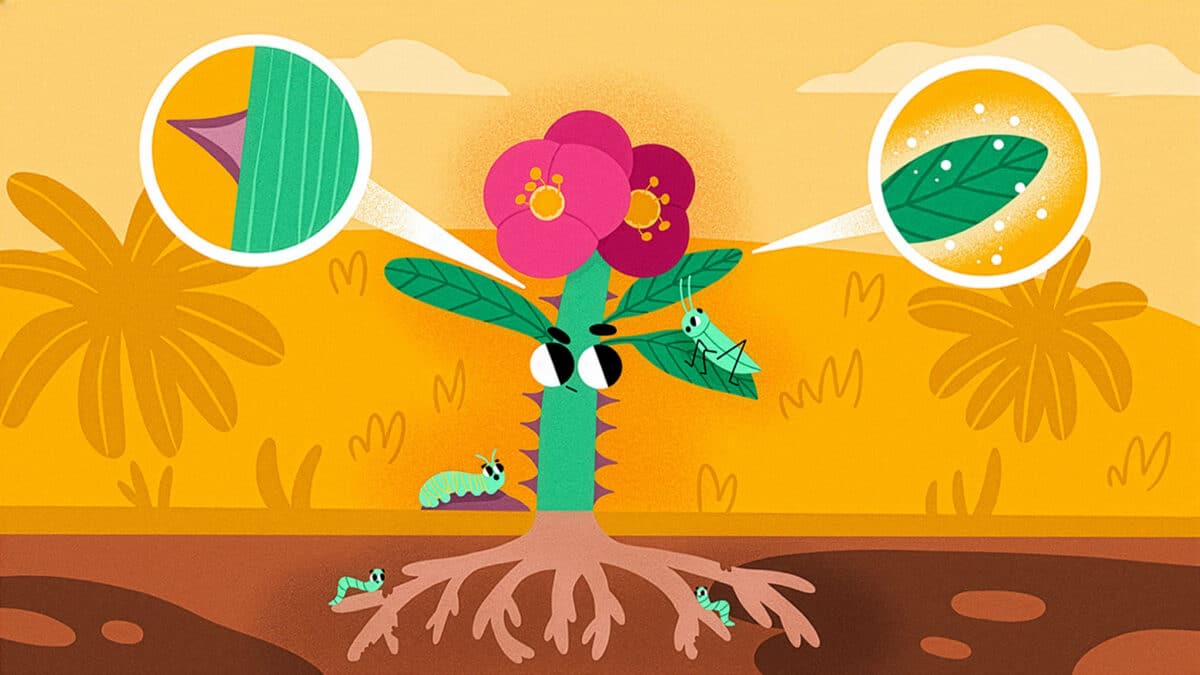
Plants Weren’t Trying to Get Us High — They Were Trying to Stay Alive
Humans like THC because it interacts with receptors we evolved for our own endocannabinoids. We enjoy caffeine because it fits a receptor slot like a forged key. We melt for cacao because its molecules stimulate pleasure pathways. But none of these compounds were created “for us.”
Plants evolved psychoactive molecules primarily as:
1. Pest deterrents — toxins, stimulants, and bitter alkaloids scare off insects and grazing animals.
2. Survival signaling — compounds that prevent mold, bacteria, or predators from consuming them.
3. Competitive weapons — allelopathic chemicals that poison the soil for nearby competitors.
4. Stress responses — antioxidants and adaptogens produced under environmental pressure.
In evolutionary language, THC is a sunscreen and antibiotic. Caffeine is insect neurotoxin repurposed for human motivation. Cacao’s bliss chemicals were designed to protect seeds from microbial decay. Reishi’s calming compounds are part of its immune arsenal. Amanita muscaria’s dreamlike molecules probably evolved to make animals sick enough to avoid eating it twice.
Everything that chills us out, lifts us up, or bends our consciousness was originally meant to keep the plant — not us — alive.
So Why Do Humans Love These Compounds So Much?
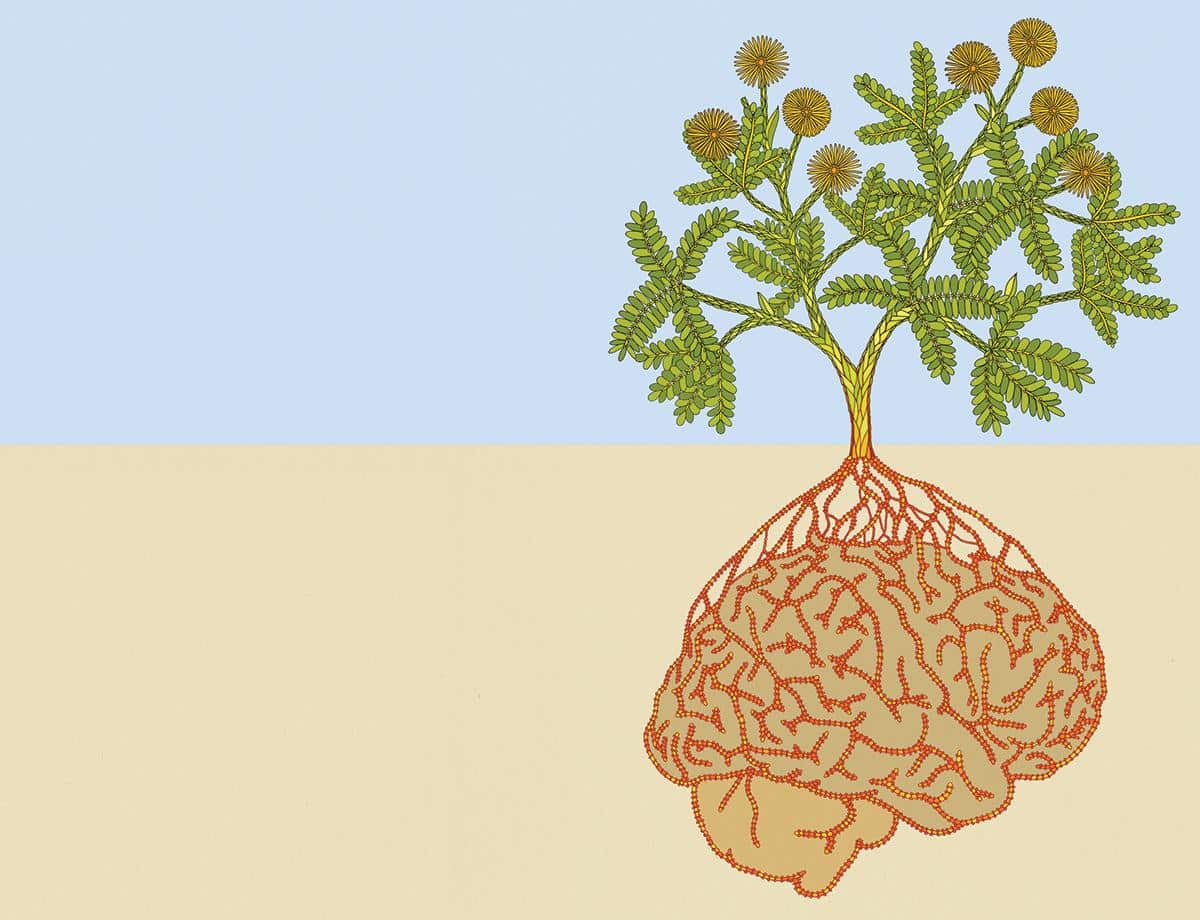
Because our brain chemistry accidentally syncs with the plant world like two pieces of cosmic Velcro.
Our bodies evolved systems — the endocannabinoid system, the adenosine system, the serotonin system — to regulate mood, inflammation, alertness, and perception. Plants, seeking their own survival, evolved chemicals that happen to fit into these same control panels.
When human biology and plant biochemistry overlap, strange magic happens:
- Caffeine blocks the receptor that triggers tiredness.
- THC mimics anandamide, our “bliss molecule.”
- CBD modulates stress responses without intoxication.
- Cacao stimulates dopamine, serotonin, and anandamide simultaneously — the botanical triple threat.
- Kava engages GABA pathways to slow the nervous system.
- Lion’s Mane encourages nerve growth factor, sharpening cognition.
- Psilocybin dissolves rigid brain patterns, boosting neuroplasticity.
To a plant, these chemicals belong to a survival toolkit.
To a human, they feel like answers.
From Accident to Addiction: Humans Start Selecting the “Good Stuff”
Once early humans noticed which plants made them awake, calm, euphoric, focused, protected from pain, or spiritually unbound, a relationship formed. We bred these species — consciously or unconsciously — for the traits that made us feel something.
Cannabis was bred for stronger resin.
Coffee for higher caffeine.
Cacao for deeper flavor and smoother mood effects.
Psychedelic mushrooms for stronger psilocybin.
Kava for clean, anxiolytic lactones.
We became co-evolutionary partners — altering each other across millennia. Plants shaped our cultures, and in turn, we shaped their chemistry.
The Ritualization of the Chemical Arms Race
What began as survival chemistry became global cultural pillars:
- Coffee built entire economies, religions, and revolutions.
- Cannabis became medicine, sacrament, outlaw, trend, and now wellness staple.
- Cacao was currency before it was candy.
- Kava governs social harmony across the Pacific.
- Mushrooms shaped indigenous cosmology and now modern neuroscience.
We didn’t just consume these compounds — we turned them into rituals.
Morning coffee, evening cannabis, ceremonial cacao, social kava circles, therapeutic mushroom sessions.
Plants weren’t trying to bond with us. But we bonded with them anyway.

The Modern Twist: Humans Are Now Guiding Evolution on Purpose
Today’s farmers, botanists, and geneticists aren’t just cultivating plants — they’re curating experiences.
High-THCa hemp that hits like classic cannabis.
CBD strains bred for ultra-calm clarity.
Cold brew coffee engineered for smooth stimulation.
Cacao processed to preserve its mood-elevating compounds.
Psychedelic mushrooms bred for consistent potency.
This is no longer natural selection — it’s intentional selection, guided by what humans crave from the plant kingdom.
We’ve stepped fully into the evolutionary arena.
So Who’s Winning This Arms Race — Plants or People?
Depends on how you look at it:
Plants win because we cultivate them worldwide, protect their genetics, and devote entire industries to their survival.
Humans win because nature gifted us molecules that shape consciousness, culture, and mental health.
But the real victory is the partnership — messy, ancient, accidental, and intimate.
Plants evolved chemicals to defend themselves.
Humans evolved brains that found meaning in those chemicals.
Together, we’ve created some of the most powerful biological alliances on Earth.
Final Thought
Every time you sip coffee, take CBD, enjoy cannabis, melt a piece of dark chocolate, or microdose mushrooms, you’re participating in a story millions of years old — the ongoing conversation between plant chemistry and human consciousness.
Nature wasn’t trying to impress us.
It was trying to survive.
We were the ones who turned survival molecules into culture, ritual, medicine, and joy.
Back to TheCannaCompany.com
