


Cannabis, CBD, Hemp Benefits
Gen Z Is Trading Alcohol for Cannabis — And It’s Changing How We Party
Culture · Gen Z · Cannabis · Social Life
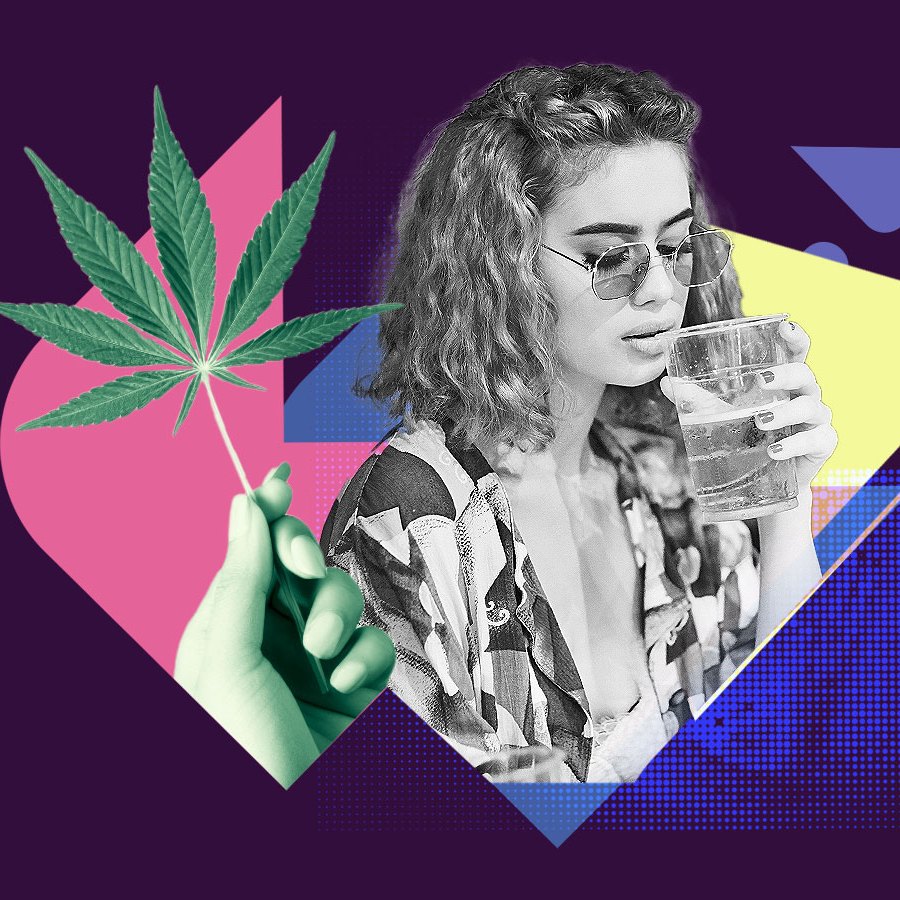
Gen Z is drinking less than any generation before them — and a lot of them are replacing booze with cannabis. Nobody panic. Let’s just look at what’s actually happening to parties, bars, and Saturday nights.
Something weird is happening at parties. The beer is getting warm. The wine is going unfinished. And someone in the corner is passing around a gummy instead of a shot glass.
This isn’t a fluke. It’s a trend backed by a pile of data that is genuinely surprising in its scale. Nearly two in three Gen Zers — 65% — plan to drink less in 2025. Around 69% of adults aged 18–24 say they prefer cannabis to alcohol. And 56% of that same group say they’ve actively replaced alcohol with cannabis.
That’s not a niche thing. That’s a generational pivot happening in real time — and it’s quietly reshaping what a night out looks like, what “having a drink” means, and what the bar industry is going to do about it.
Here are 6 ways it’s playing out.
The Numbers Are Actually Kind of Staggering
Let’s start with the scoreboard, because it’s wild.
Gen Z consumes about 20% less alcohol per capita than Millennials — who themselves drink 20% less than Gen X did at the same age. A Gallup survey found that the share of adults under 35 who drink at all dropped ten percentage points over two decades — from 72% in 2001 to 62% in 2023.
Meanwhile, cannabis use among 18–25-year-olds hit 36.5% in the 2023 National Survey on Drug Use and Health. And roughly 1 in 2 adults in that age range have tried it at least once.
These aren’t people quitting substances entirely. They’re switching. And they have very specific reasons for doing it — which brings us to point two.
The Reasons Are Pretty Mundane (In a Good Way)
You might expect some grand philosophical reason for the shift. A generational rejection of vice culture. A wellness revolution. A moment.
Mostly it’s: hangovers are terrible, alcohol is expensive, and weed doesn’t make you do embarrassing things you have to apologize for on Monday.
Gen Zers are significantly more likely than average to say they avoid drinking to save money, avoid hangovers, or avoid getting drunk. A $17 cocktail at a club versus a $15 joint that lasts all night is a financial comparison that doesn’t require a finance degree.
There’s also the social media factor. As one clinical counselor put it in the Columbia Chronicle: “Gen Z lives in a time where everything is easily recorded.” Getting sloppy drunk carries different stakes when anyone in the room has a phone. Cannabis tends to produce quieter, more controllable states. That’s not nothing when your next employer might be watching your Instagram stories.
Related Reading
We explored this shift in depth in The Anti-Alcohol Generation — why younger people aren’t rejecting the idea of altering their state, they’re just upgrading how they do it.
Social Gatherings Are Actually Changing Shape
Here’s where it gets interesting. The alcohol-to-cannabis swap isn’t just a private bedroom thing. It’s changing the physical infrastructure of how people get together.
Sober bars are real and growing. Over 1 in 5 Americans plan to visit a sober bar in 2025 — a space that serves no alcohol. Among Gen Z specifically, that number jumps to 41%. Venues like Hekate in New York City, Sans Bar in Austin, and The Sober Social in Atlanta are building actual businesses around the idea that people want to go out without drinking.
Cannabis lounges are emerging as a legitimate category. California legalized Amsterdam-style cannabis cafes in 2025, joining Colorado, which already has licensed consumption lounges. Denver’s Cirrus Social Club has been described as “the high tea of weed” — upscale, intentional, and explicitly designed as an alternative to the bar experience.
House parties are changing too. 65% of Gen Z drinks at home, and 27% at friends’ houses — suggesting the social drinking that does happen has moved inward and gotten more intimate. A smaller group, a curated vibe, a gummy or a tincture instead of a third round of drinks. Less chaos, more conversation.
What does this mean for the bar and nightclub industry? Total U.S. alcohol beverage sales were down 3% in the first half of 2025, with volume declines across nearly every major segment. Someone’s paying for the generational pivot — and it’s the alcohol industry.
Cannabis Drinks Are Trying to Be the New Beer
The most visible symptom of the shift: a booming market for cannabis-infused beverages designed specifically for social settings.
THC seltzers, CBD tonics, hemp-infused sparkling waters — these aren’t fringe products anymore. U.S. cannabis beverage sales are projected to hit $2.8 billion by 2028, growing at a compound annual rate of nearly 17% — compared to the alcohol industry’s projected 2.4%. Over a quarter of all Americans say they plan to try a cannabis-infused drink in 2025. Among Gen Z and Millennials, that number hits 38%.
The appeal is practical: new nanoemulsion technology means cannabis drinks can kick in within 5–15 minutes — compared to traditional edibles that can take an hour or more. That makes them actually usable in a social setting where you want to calibrate your experience in real time, not play roulette with a brownie you ate 45 minutes ago.
The format also solves a longstanding awkwardness: you can hold a can at a party. No pipe, no vape cloud drifting into someone’s face, no explaining yourself. Just a beverage. The social ritual of having something in your hand — which turns out to matter more than most people admit — stays intact.
Related Reading
Not everyone who’s reaching for a cannabis product wants to get high. Cannabis for People Who Don’t Like Drugs explores how CBD, CBG, and low-dose THC are serving a completely different purpose for a growing chunk of the population.
The Vibe Actually Is Different — And That’s Not Necessarily Bad
Let’s be real about something: alcohol and cannabis produce different social environments. Anyone who’s been to both a drunk party and a high party knows this.
Alcohol loosens inhibitions in a specific, well-documented way: it removes the internal editor. It makes people louder, more impulsive, more likely to say the thing they’ve been thinking, more likely to do the thing they probably shouldn’t. That’s both the appeal and the risk.
Cannabis tends to produce something different. As one cannabis beverage brand puts it: “If booze turns a crowd wild, social cannabis tends to soothe a room. The vibe often shifts from loud and loose to calm and connected.” Whether that’s better or worse depends entirely on what you were hoping the night would be.
For some people — especially introverts, people with anxiety, or people who’ve simply had enough chaotic nights — that calmer register is the point. Cannabis gives you something to do with your hands and your brain without turning the volume all the way up.
The trade-off is real though. Cannabis socials can be quieter to the point of being slow. Not everyone who shows up to a party wants to have a deeply meaningful conversation while staring at the ceiling. Social dynamics built around alcohol — the confidence boost, the shared ritual of rounds, the lubrication of awkward first meetings — don’t automatically transfer. The culture is still figuring out what replaces them.
It’s Not All Perfect — And the Data Is Honest About That
This piece is neutral, so here’s the part where we don’t just cheerlead.
The shift from alcohol to cannabis isn’t automatically a health win. As addiction psychiatrist Dr. Akhil Anand notes: “There are people using cannabis to cope with stress and depression, just like they were using alcohol. We see similar harmful use patterns.” Swapping one substance for another doesn’t solve the underlying reason someone needs to alter their state in the first place.
Those who are genetically predisposed to alcoholism may also be predisposed to cannabis use disorder — meaning the swap isn’t a clean fix for everyone. And while cannabis doesn’t cause liver failure or the kind of acute overdose risk that alcohol does, heavy daily use carries its own set of concerns around motivation, memory, and mental health that deserve honest acknowledgment.
The picture is complicated. Most things worth paying attention to are.
What’s clear is that the generation now entering adulthood is making different choices about substances than any generation before them — more intentional, more health-aware, more financially cautious, and more likely to reach for a gummy than a glass. Whether that’s better or just different, the party is changing. And the bar industry, the cannabis industry, and anyone planning a social event in 2025 is going to have to figure out what that means.
From The Canna Company
If you’re curious about where CBD and cannabinoids fit into all this — not the party drugs, the functional ones — CBD vs. Tylenol is a good place to start. And if you want to explore what’s actually on the shelf, browse our full product range here.