


CBD, CBG, Hemp Benefits, Magic Mushrooms
Mushrooms vs Cannabis: Which One Helps You Relax Better?
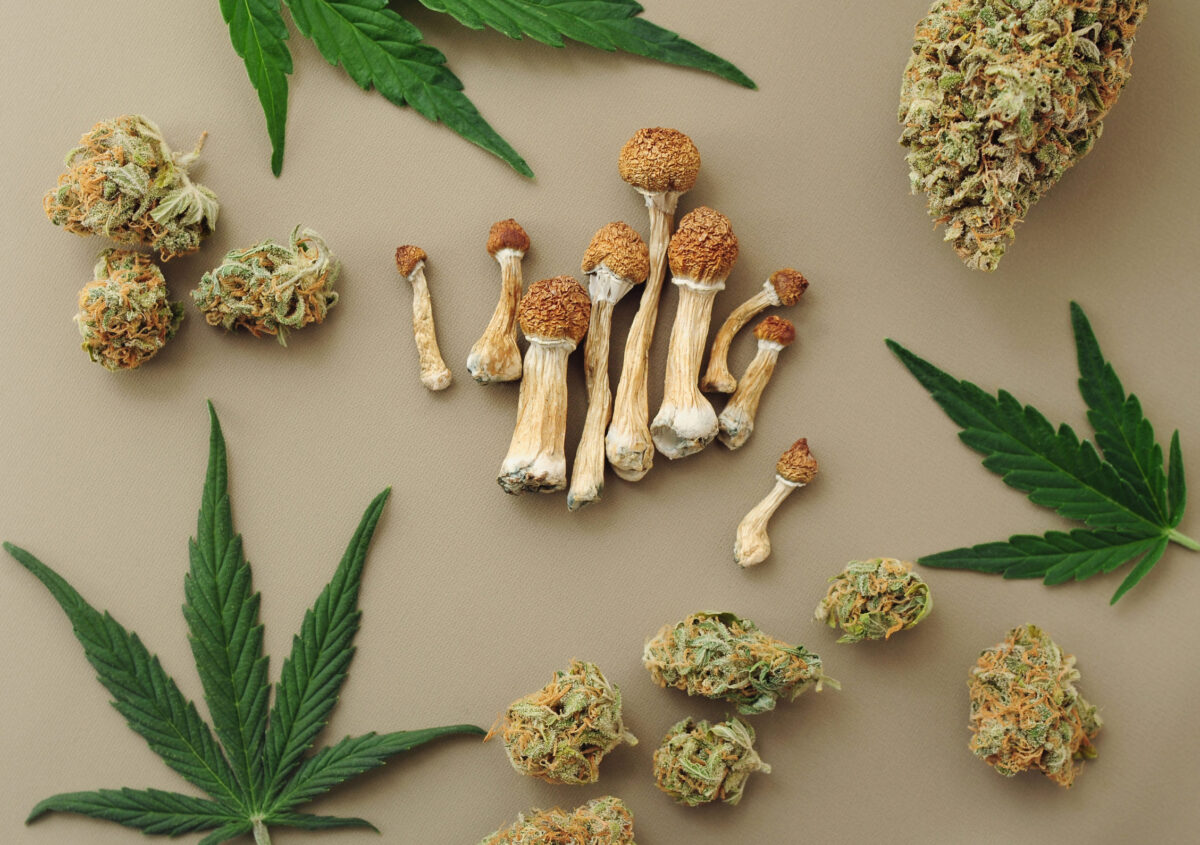
Where Cannabis Calm Meets Mushroom Medicine
Relaxation is no longer a one-note concept. It’s a spectrum — a shifting landscape shaped by brain chemistry, ancient plant knowledge, and the modern science that’s finally catching up. Today, two kingdoms sit at the center of the global chill-seeking movement: cannabis and mushrooms. Each has its own rhythm, its own history, and its own signature way of softening the edges of a stressful world.
- Cannabis for Relaxation
- Mushrooms for Relaxation
- Who Wins the Relaxation Battle?
- The Rise of the Duo: When Mushrooms and Cannabis Work Together
- Our Conclusion
Cannabis for Relaxation: The Calm That’s Coded Into Us
If cannabis has an “ambassador of tranquility,” it’s CBD. Long studied for its ability to reduce anxiety without intoxication, CBD interacts with serotonin pathways and has been shown to modulate the body’s fight-or-flight response in measurable ways. Research indicates it can ease stress by lowering cortisol and encouraging a calmer baseline state (study). It’s the kind of relaxation that sneaks up on you — a quieting, rather than a clouding — making it ideal for social anxiety, post-work decompression, or simply easing into sleep.
CBG, often called “CBD’s sharper cousin,” takes a different route. In a 2024 controlled human trial, participants given 20 mg of CBG reported significant reductions in stress and anxiety without any cognitive dulling (study). If CBD is the exhale, CBG is the steadying hand: a calm that brings clarity, not sedation. Many describe it as a mental un-knotting — clean focus wrapped in warmth.
Then there’s THCa — the quiet giant of the cannabinoid world. In its raw form, it’s non-intoxicating. But once heated, it becomes THC, delivering the slow-melt physical relaxation many people seek after long days or chronic tension. THCa’s emerging scientific profile is intriguing: it activates PPAR-γ, a receptor involved in inflammation control and neuroprotection (study). The experience? Muscles unclench, the body unwinds, and the nervous system steps off the gas.
Mushrooms for Relaxation: The Mycelial Spectrum
Relaxation in the fungal kingdom comes in flavors as varied as the forests they emerge from. Some mushrooms gently soothe. Others sharpen the senses. Some open emotional doors you didn’t realize were locked.
Reishi, long revered in Eastern medicine, is the “Zen mushroom.” Its triterpenes and beta-glucans are linked to lower stress markers and better sleep quality, making it an adaptogen that coaxes the body into balance rather than overriding it (evidence summary). Reishi’s relaxation is subtle but steady — a warm grounding that builds over time.
Lion’s Mane takes the opposite path: not sedating, but centering. Most people don’t feel “relaxed” in a sleepy way — they feel aligned. Lion’s Mane supports cognitive function and may encourage nerve growth factor, making it ideal for workday calm, mental clarity, and stress without the fog (review). If Reishi is a nightcap, Lion’s Mane is a morning ritual.
The iconic Amanita muscaria, often misunderstood, works through muscimol — a compound acting on GABA receptors, the same calming pathways targeted by many anti-anxiety medications. Research suggests muscimol has neuroprotective and sedative-leaning properties without the psychedelic intensity of psilocybin (study). The result is a dreamy, floaty tranquility — soft-focus relaxation that feels almost retro in its warmth.
Psilocybin, meanwhile, isn’t a “quick chill” molecule at all — it’s a deep dive. Clinical trials with cancer patients show a single dose can dramatically reduce anxiety and depression for months, even years (NYU study). Its power lies not in sedation, but in emotional release. Many feel lighter, more open, and more at peace long after the experience ends. But it’s not ideal for an anxious first-timer or a casual nightly ritual.

Who Wins the Relaxation Battle?
It depends on what kind of relaxation your body is asking for.
If you need immediate physical unwinding — a body that melts into the couch within minutes — THCa (heated) or THC usually wins. When anxiety is the main enemy, CBD and CBG offer a clear-headed calm that doesn’t compromise function.
For those seeking dreamy, cozy softness, Amanita muscaria provides a unique, non-psychedelic float that cannabis rarely replicates. And when the goal is long-term emotional recalibration rather than moment-to-moment tension relief, psilocybin stands in a category of its own.
Nighttime routines often find their sweet spot in combinations: Reishi for grounding, CBD or CBG for mental quiet, and sometimes both, weaving a slow and steady descent into rest.
The Rise of the Duo: When Mushrooms and Cannabis Work Together
Increasingly, people aren’t choosing sides — they’re assembling their own botanical toolkit. CBD paired with Reishi brings an ultra-smooth evening calm. CBG combined with Lion’s Mane creates a clear-headed, anxiety-resistant workflow. Amanita with CBD produces a cozy, low-stress glow, while THCa partnered with Reishi offers deep body relief without overwhelming the mind.
Modern relaxation isn’t a single plant or a single mushroom. It’s a conversation between them.
Our Conclusion
There’s no universal champion in the relaxation wars — only different pathways to peace. For everyday calm, CBD or CBG may be your allies. For a physical “off switch,” THCa holds the crown. For floaty, dreamy vibes, Amanita offers something no cannabinoid can mimic. For emotional resilience, psilocybin remains unmatched.
Relaxation isn’t a one-size-fits-all destination. It’s a toolkit. And with the right blend of plants and fungi, it becomes a map — one that leads you back to yourself.
Back to TheCannaCompany.com