


Cannabis, CBD, Hemp Benefits
CBD for Insomnia: What’s Happening in Your Brain at Night — and What the Science Says Actually Works
Sleep Science · CBD · CBN · Neuroscience
About a third of American adults don’t get enough sleep. Many of them are trying CBD. Some of it’s working — but probably not for the reason most people think. Here’s what’s actually happening in your brain when you take cannabinoids at night, and when it’s worth trying.
Let’s start with the most important thing to understand about CBD and sleep, because most of the marketing around it gets this backwards.
CBD is probably not a sedative.
It doesn’t knock you out the way a sleeping pill does. It doesn’t reliably reduce the time it takes you to fall asleep the way melatonin sometimes can. A 2025 meta-analysis of over 30 placebo-controlled trials concluded that CBD does not directly prolong sleep — but it can reduce nighttime awakenings and improve how rested you feel in the morning.
That’s a different mechanism entirely. And once you understand it, CBD’s inconsistent reputation as a sleep aid starts to make a lot more sense.
The Real Reason CBD Helps Some People Sleep
Here’s the neuroscience in plain language.
Your body has an endocannabinoid system — a network of receptors that regulates mood, pain, inflammation, and crucially, the stress response. When you’re anxious, your brain is essentially stuck in a threat-detection loop. Cortisol stays elevated. The prefrontal cortex, which handles rational thought, gets partially overridden by the amygdala, your brain’s alarm system. Sleep doesn’t happen well under those conditions because your nervous system is running on alert.
CBD appears to interrupt this loop. Research suggests CBD may lower cortisol levels by downregulating the gene responsible for the corticotropin-releasing hormone — one of the primary chemical signals that keeps your nervous system in a wakeful, stressed state. It also acts on the 5-HT1A serotonin receptor, which plays a role in anxiety regulation.
The result, for people whose sleep problems are rooted in anxiety or a hyperactive stress response: CBD doesn’t make you sleep — it stops you from fighting your body’s attempt to sleep. That’s a meaningful distinction. If your insomnia is structural — a circadian rhythm disorder, sleep apnea, a physiological inability to stay asleep — CBD is probably not going to solve it. If your insomnia is anxiety-driven, the mechanism is real.
What CBD Actually Does to Your Sleep Architecture
Sleep isn’t one thing. It’s a cycle of distinct stages — light sleep (N1, N2), deep slow-wave sleep (N3), and REM sleep — each serving different biological functions. Deep sleep drives physical recovery and memory consolidation. REM is where emotional processing happens, where dreams occur, and where your brain files the day’s experiences into long-term storage.
How CBD interacts with these stages is more nuanced — and more complicated — than most CBD marketing acknowledges.
At lower doses, CBD appears to have a mild alerting effect. At higher doses, it tends toward sedation. This biphasic, dose-dependent response is one reason CBD affects different people differently — the dose someone is taking matters enormously, and most consumer products don’t make this easy to calibrate.
On REM sleep specifically, the picture is interesting. Research has found that CBD can block anxiety-induced REM sleep suppression — meaning when stress is what’s disrupting your REM cycle, CBD may restore it. In people with PTSD, whose REM sleep is characteristically disturbed by trauma-related anxiety, this is particularly relevant.
However, a 2026 EEG study from Macquarie University found that high-dose THC/CBD combination actually reduced total REM sleep and decreased deep sleep quality markers — a reminder that more is not always better, and that combining cannabinoids changes the equation significantly.
Enter CBN — The Cannabinoid Nobody’s Heard Of (Yet)
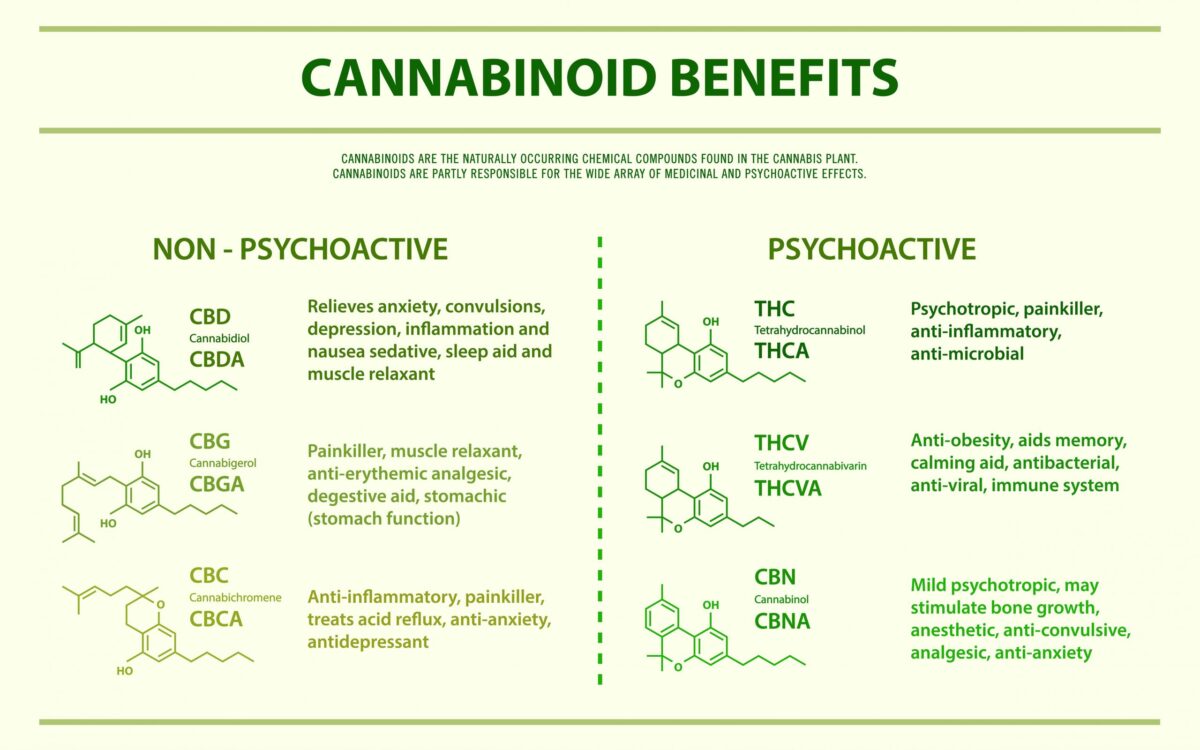
While CBD has dominated the wellness conversation, a quieter shift has been happening in sleep research. Scientists have been taking a closer look at cannabinol — CBN — a minor cannabinoid that forms naturally as THC degrades over time. It’s why older cannabis has a reputation for making people sleepy: as THC breaks down, CBN levels rise.
For decades, this was cannabis folklore with limited scientific backing. That started to change in 2024.
A landmark study from the University of Sydney’s Lambert Initiative for Cannabinoid Therapeutics — published in Neuropsychopharmacology — provided the first objective, polysomnography-measured evidence that CBN increases sleep. The findings were striking: CBN increased both NREM and REM sleep, boosting total sleep time. Lead researcher Professor Jonathon Arnold noted the effect was “comparable to the known sleep drug zolpidem” — and unlike THC, CBN did not appear to intoxicate.
A separate 2024 double-blind, randomized, placebo-controlled trial of 321 participants with poor sleep found that 20mg of CBN nightly significantly reduced nighttime awakenings and overall sleep disturbance compared to placebo. Crucially, it had no impact on daytime fatigue — one of the most common complaints with conventional sleep medications.
And in a large trial of over 1,000 participants, 50mg of CBN showed sleep improvements that were statistically equivalent to 4mg of melatonin — with similar safety profiles and mild side effects.
So When Does CBD Actually Help — And When Doesn’t It?
Based on the current state of research, here’s an honest framework for thinking about cannabinoids and sleep:
CBD is most likely to help if: your sleep problems are driven by anxiety, stress, or a racing mind at bedtime. The anxiolytic mechanism is the best-supported pathway in the literature. When anxiety decreases, sleep tends to follow. If you lie awake replaying your day, catastrophizing about tomorrow, or can’t quiet your nervous system at night — this is where CBD has the strongest case.
CBD is less likely to help if: your sleep issues are structural. If you have sleep apnea, a circadian rhythm disorder, chronic pain that’s keeping you awake, or true physiological insomnia, CBD alone is unlikely to resolve it. It may take the edge off, but it’s not addressing the root cause.
CBN is most likely to help if: your primary complaint is waking up during the night. The 2024 trial data specifically shows reductions in nighttime awakenings and overall sleep disturbance — not necessarily faster sleep onset. If you fall asleep fine but wake at 2am and can’t get back down, CBN is worth attention.
Format and timing matter more than most people realize. A CBD tincture taken sublingually hits your bloodstream in 8–15 minutes. A gummy taken at 10pm may not peak until midnight. Getting the timing wrong is one of the most common reasons people try CBD for sleep and report it “didn’t work.” The delivery method is not an afterthought — it’s part of the intervention.
Related Reading
We covered the format question in depth in our 30-day CBD experiment — including which delivery methods actually landed and which ones were basically invisible. Worth reading if you’re still trying to figure out the right product for your routine.
A Note on Dosing — The Gap Between Labs and Labels
One honest complication: the doses used in clinical trials are often significantly higher than what most consumer CBD products deliver.
The large case series showing anxiety and sleep improvements used doses ranging from 25mg to over 150mg. The trial showing cortisol reduction and sedative effects used 300–600mg. Most consumer CBD gummies deliver 10–25mg per serving. This gap between lab doses and what’s on the shelf is a real limitation — and it’s one reason CBD’s effects in everyday use can feel more subtle than clinical trial results suggest.
That said, real-world reports of improvement at lower doses are widespread and consistent enough to be meaningful. The prevailing interpretation in current research is that even at lower doses, CBD reduces physiological stress markers — and that an evening ritual, consistent use, and good sleep hygiene collectively amplify whatever the compound is doing. Context is not a confound. It’s part of how it works.
For CBN, the effective doses in trials clustered around 20–50mg — a range that some consumer products are now reaching, though quality and purity vary significantly. The University of Sydney researchers have noted that a drug discovery program around CBN is now underway — suggesting this is a compound the scientific community is taking increasingly seriously.
The Honest Bottom Line
CBD is not a sleeping pill. It doesn’t work the same way, and expecting it to will lead to disappointment. What it may do — particularly for anxiety-driven sleeplessness — is reduce the neurological friction that keeps people awake. It removes the obstacle. What happens after that depends on you, your dose, your timing, and what’s actually causing the problem.
CBN is the more directly sleep-relevant cannabinoid based on current evidence — acting on sleep architecture itself rather than routing through anxiety reduction. The research is newer and still developing, but the 2024 data is genuinely compelling, and it’s the reason sleep-focused cannabinoid products are increasingly formulated around CBN rather than CBD alone.
Neither is a complete solution. Both are worth understanding. And both work significantly better when paired with the basics that sleep research has supported for decades: consistent bedtimes, a dark and cool room, less screen time before bed, and less cortisol in general — which, as it turns out, is exactly where CBD’s most reliable mechanism lives.
From The Canna Company
If you want to explore CBD for sleep, The Canna Company’s tincture and gummy lineup is a solid starting point — and if you’re looking for something that makes the evening ritual genuinely enjoyable, Dr. Funny’s CBD Honey stirred into chamomile tea before bed remains one of the most pleasant formats for winding down.