


History · Prohibition · Plants · Power
Governments have been trying to ban plants that make people feel good for at least 500 years. Coffee, tea, alcohol, cannabis — the details change. The pattern doesn’t. Here’s a brief and embarrassing tour through humanity’s worst habit: prohibiting nature and calling it policy.
There is a specific kind of political panic that hits rulers when they realize their subjects have found something that makes them feel calm, connected, or creatively alive. The rulers don’t like it. They never have. The substance changes across centuries, but the response is remarkably consistent: ban it, burn it, punish the people who won’t stop using it, watch the ban fail, eventually lift the ban.
Five times in particular stand out. Each one is funnier, sadder, and more familiar than it has any right to be.
The world’s first recorded coffee ban was issued in Mecca in 1511 by a man named Khair Beg, the city’s governor. He had recently discovered that satirical verses mocking him were being written and shared openly at coffeehouses. His solution was not to improve his governance. His solution was to ban coffee.
Khair Beg convened a council of religious scholars and made the case that coffee was an intoxicant on par with wine, and therefore forbidden under Islamic law. The scholars agreed. Coffeehouses in Mecca were closed. Stocks of coffee were burned in the street.
The ban lasted weeks. The Sultan of Egypt, himself an enthusiastic coffee drinker, sent word that the prohibition was illegal and had Khair Beg removed from his position. Coffee returned to Mecca. The satirists presumably resumed their work.
Year
1511
Plant
Coffee bean
Official Reason
Religious grounds. Real reason: the governor was getting roasted.
Sultan Murad IV took the Ottoman throne at age 11 and spent the next three decades proving he had something to prove. Among his contributions to governance: banning coffee, alcohol, and tobacco across Constantinople simultaneously, on the grounds that coffeehouses encouraged political rebellion and anti-authoritarian thinking.
To enforce this, Murad IV reportedly walked the streets of Istanbul in disguise at night with a hundred-pound broadsword, personally decapitating subjects he caught drinking coffee. First offense: a beating. Second offense: sewn into a leather bag and thrown into the Bosporus.
After Murad died in 1640 of cirrhosis — caused, historians note, by his own heavy drinking, which he had apparently exempted himself from the ban — his successors showed considerably less enthusiasm for enforcement. By the mid-1600s, Istanbul’s underground coffeehouse culture was thriving. By the 18th century the ban was gone. Today Turkey has a Starbucks on every corner.
Year
1633
Plant
Coffee bean (again)
Enforcement method
Personal decapitation by disguised sultan
“The punishment for a first offense was a beating. Anyone caught with coffee a second time was sewn into a leather bag and thrown into the waters of the Bosporus.”
— Ka’ū Coffee Mill, on Sultan Murad IV’s coffee enforcement strategy
Britain didn’t ban tea. Britain did something subtler and considerably more destructive: it taxed it. The Tea Act of 1773 granted the East India Company a monopoly on tea sales in the American colonies, cutting out local merchants and imposing duties that colonists had no say in.
The colonies’ response was the Boston Tea Party, in which approximately 342 chests of tea were thrown into Boston Harbor. The protest, organized by the Sons of Liberty, destroyed tea worth roughly £10,000, about $2 million in today’s money. Britain responded with the Coercive Acts, which the colonists called the Intolerable Acts. One revolution later, the British had lost their most valuable colonial territory over a plant-derived beverage that people simply refused to give up.
The lesson the British took from this was apparently not universal, because they continued taxing things colonies didn’t want taxed for another two centuries.
Year
1773
Plant
Tea leaf
Unintended consequence
The United States of America
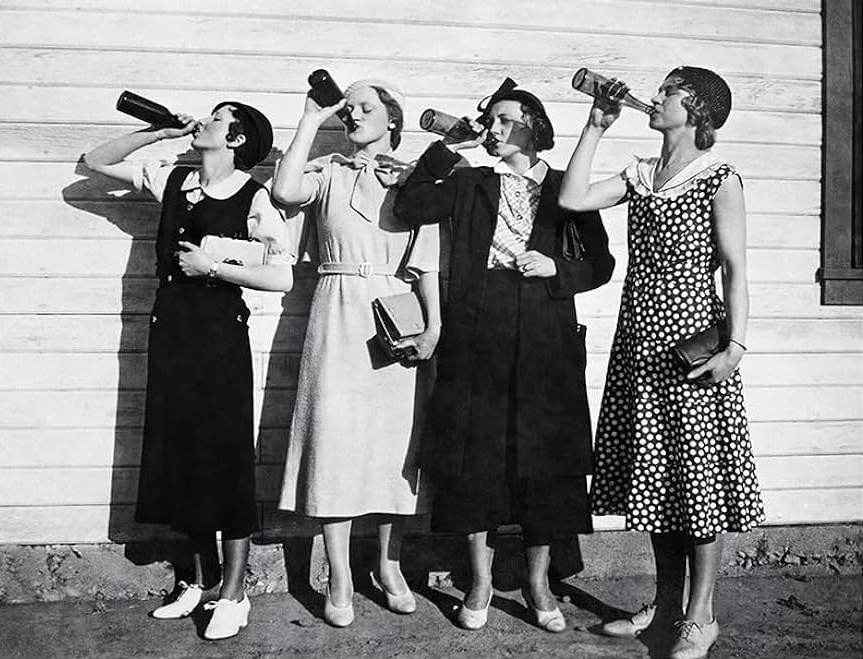
Prohibition is the most studied, most quoted, and most obvious example of plant prohibition failing spectacularly, and yet here we are, still citing it. The 18th Amendment took effect on January 17, 1920. It banned the legal production and sale of alcoholic beverages across the United States, backed by decades of temperance movement campaigning and genuine concerns about alcohol’s social costs.
What followed was a 13-year experiment in what happens when you criminalize something a large portion of the population wants and will continue to obtain regardless. Bootlegging became an industry. Speakeasies numbered in the thousands. Al Capone became a household name. Tax revenue from alcohol evaporated. Respect for law enforcement declined broadly. And consumption, after a brief initial dip, largely recovered.
The 21st Amendment repealed Prohibition in 1933. Flush with the success of alcohol prohibition, temperance campaigners turned their attention toward cannabis in the years that followed. The rest of that story took another 90 years to resolve, and is still resolving.
Year
1920
Plant
Grain / grape (fermented)
Legacy
Organized crime, the cocktail, and a blueprint nobody learned from
Related Reading
The generational pivot away from alcohol is still playing out. Our piece on The Anti-Alcohol Generation looks at what’s replacing it and why the shift is bigger than anyone expected.
The Marijuana Tax Act of 1937 didn’t technically ban cannabis. It imposed a tax so punishing that legal use became nearly impossible, which was the point. Cannabis had been used medicinally and industrially across America for decades, appearing in medicines, textiles, and paper products. Hemp had been grown on American soil since 1619, when a Virginia colony law required every farm to cultivate it.
The architect of the federal crackdown was Harry Anslinger, first Commissioner of the Federal Bureau of Narcotics, who launched a ferocious anti-cannabis campaign and held his post for more than three decades. His strategy leaned heavily on racial fear, associating cannabis with Mexican immigrants and Black jazz musicians in newspaper campaigns that would look unambiguous to any modern reader. The word “marijuana” itself was pushed into mainstream usage specifically to underscore what Anslinger and allies called the drug’s “Mexican-ness.”
By 1931, 29 states had banned cannabis. By 1970, the Nixon administration placed it in Schedule I under the Controlled Substances Act, the most restrictive federal category, alongside heroin, above cocaine and methamphetamine. A commission Nixon himself appointed recommended decriminalization. He ignored it.
Cannabis remained Schedule I for 55 years. The rescheduling to Schedule III came in 2025, nearly a century after the first federal prohibition effort. In that time, the plant developed a $30 billion legal industry, generated billions in state tax revenue, and saw the majority of American adults use it at least once, legal or not.
Year
1937
Plant
Cannabis / hemp
Duration
88 years federally. Still ongoing in some states.
The Pattern Is the Point
Five bans. Five plants. Five governments convinced that the way to handle something people clearly wanted was to make it illegal. The coffee drinkers kept drinking. The tea drinkers dumped the taxed stuff and started a revolution. The bootleggers opened speakeasies and built organized crime syndicates. The cannabis users — well, they just kept going, for 88 years, until the law finally followed where the culture had already been for decades.
The pattern across all five: the ban reflected the interests of whoever was in power at the time, not the evidence about the plant itself. Khair Beg banned coffee because people were mocking him in coffeehouses. Murad IV banned it because people were organizing. Britain taxed tea because it needed revenue. The temperance movement banned alcohol because it genuinely believed in the cause, and was genuinely wrong about the outcome. Anslinger banned cannabis using race as a weapon and corporate lobbying as fuel.
None of the bans held. None of them could. You can pass a law against a plant. You cannot pass a law against the human impulse that makes the plant appealing in the first place.
The good news, for anyone buying a CBD tincture or dropping a Smiles High gummy before a long weekend, is that we appear to finally be on the right side of history. It only took 500 years.
From The Canna Blog
For a deeper look at how pharmaceutical lobbying and regulatory failure shaped drug policy in America, read Big Pharma Patented Nature and Called It Medicine and our piece on the FDA’s opioid approvals versus its cannabis obstruction.